

For most legal practices, the conversation around Tranche 2 AML/CTF reforms has changed significantly over the past 12 months. The early questions were largely educational: “Does this apply to us?”, “What is customer due diligence?”, “What does an AML/CTF Program actually involve?”… Today, though, Tranche 2 reforms are in effect and firms have moved beyond these early questions to seeking more practical guidance.
You already know you need to have your risk assessment and AML/CTF Program in place, and be completing customer due diligence, staff training and ongoing monitoring.
The challenge now is different.
The challenge is operational readiness.
Compliance platforms can help you meet your AML/CTF obligations, but they cannot redesign your business processes, update your client communications or prepare your team for the practical realities of this new compliance regime. And for many firms, that’s where the real work lies.
Compliance is only one part of the equation
There is a tendency to think about AML/CTF compliance as a technology problem. Choose a platform → complete the setup → go live. Done. In reality, compliance software is only one piece of a much larger operational puzzle. A compliant AML framework sits on top of dozens of business decisions that should be made before you ever conduct your first customer due diligence check.
- Who is acting as your Compliance Officer?
- Are you absorbing your KYC costs, passing them on as disbursements or building them into your fees?
- How are you handling existing clients who have never been asked to provide identity documentation in this context?
- Who is performing customer due diligence within your practice?
- What happens when a client refuses to provide information?
These are business decisions, not software decisions. And until they’re made, implementation tends to stall or at the very least, be inadequate.
The hidden work most firms underestimate
One of the key observations we’ve seen across our work with the legal sector is that firms are generally not underestimating the compliance requirements themselves. But sometimes, they do underestimate everything around them. For example, implementing AML/CTF obligations often means reviewing:
- Employment contracts and position descriptions
- Privacy Policies and Collection Notices
- Engagement letters and Appointment to Act documentation
- Website content and client onboarding materials
- Internal file note standards
- Staff training processes
- New starter induction programs
- Referrer and introducer communications
- Existing client files and active matters
None of these tasks are particularly difficult in isolation. But collectively, they represent a significant operational project. This is especially true for firms that are already balancing client work, staffing pressures and competing business priorities.
Your clients need to understand the changes too
AML reforms represent a fundamental change in how lawyers interact with and onboard clients. Client communication is key here. Historically, the relationship may have started with preliminary advice or engagement. Under Tranche 2, identity verification and customer due diligence have become one of the earliest touchpoints in the client journey, and without preparation, this can feel intrusive or confusing to clients. In particular, if you are dealing with long-standing clients who have worked with your firm for years and suddenly receive a request for identity documents.
The firms that manage this transition well will be the ones that proactively communicate:
- Why the information is required
- How it will be used
- How it will be stored
- What happens if it isn’t provided
Existing clients are often the biggest challenge
And speaking of existing clients, they can often ask the most questions. While many firms have focussed on new matters, the more difficult question is often what to do with existing clients. Depending on the services being provided and your risk assessment, active matters may require retrospective customer due diligence.
This means that you need to consider:
- Which existing clients require verification
- How you will prioritise those
- Who will conduct this work
- How communications will be managed
- What happens if clients refuse to engage
For firms with large active client bases, this can become a substantial project in its own right.
Why easyAML takes a broader view
At easyAML, we’ve always believed that successful AML implementation is about far more than software. Yes, of course: technology plays a critical role. Our platform helps firms manage risk assessments, AML Programs, customer due diligence, training, ongoing monitoring and record-keeping.
But we’ll be the first to say that software alone doesn’t make a business operationally ready.
That’s why we position ourselves as your compliance partner, not simply a compliance platform. We spend a significant amount of time helping firms think through the practical questions that sit around compliance:
- How will this fit into your existing workflows?
- What changes do you still need to make internally?
- How should you communicate these changes to clients?
- What decisions still need to be made?
Because in our experience, the bottleneck is rarely the technology. Instead, it is the operational change that surrounds it.
Download the Operational Readiness Guide
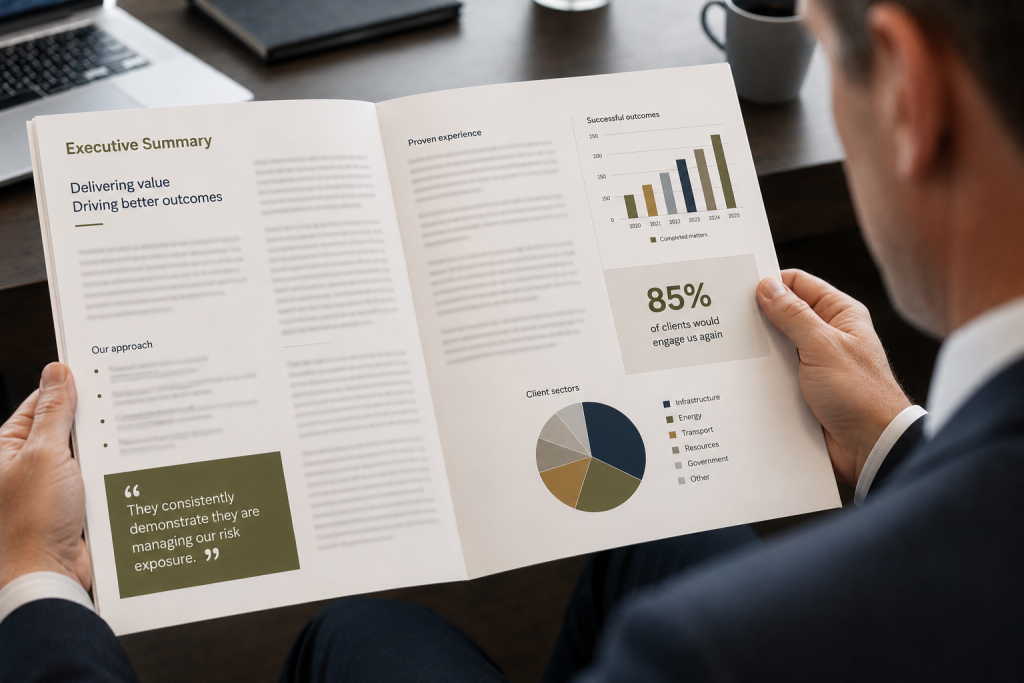
To help firms navigate this next phase, we’ve developed our AML/CTF Compliance: Operational Readiness Guide. The guide is designed specifically for firms that already understand the compliance requirements and are now focused on implementation in practice.
It covers the practical business changes that sit outside your compliance platform, including:
- Governance and decision-making
- Client onboarding and communication
- Existing client remediation
- Internal documentation and templates
- Privacy and records management
- Staff readiness and training
- Reporting and operational workflows
Most importantly, it provides a practical checklist of the tasks that firms should be considering right now. We’re confident that the firms that experience the smoothest transition to Tranche 2 will not necessarily be the ones that chose a platform first – they’ll be the ones that have prepared their staff and their clients, within the context of broader operational compliance.
Download easyAML’s Operational Readiness Guide now and start building the foundations for a successful AML implementation today.